

That is where dropshipping becomes interesting.
Dropshipping is an online business model where you sell products without keeping the products in your own inventory. When a customer places an order, a supplier handles the product fulfillment and sends it directly to the customer.
Sounds simple, right?
Well, the idea is simple. Building a successful dropshipping business takes more than simply uploading products and waiting for sales. You need to understand customers, choose useful products, create a trustworthy store, market your business, and learn from what works and what doesn’t.
Think of it like planting a small garden. You cannot put a seed in the soil today and expect a tree tomorrow. You need patience, care, testing, and consistency.
Let’s look at how you can start.
What Is Dropshipping?
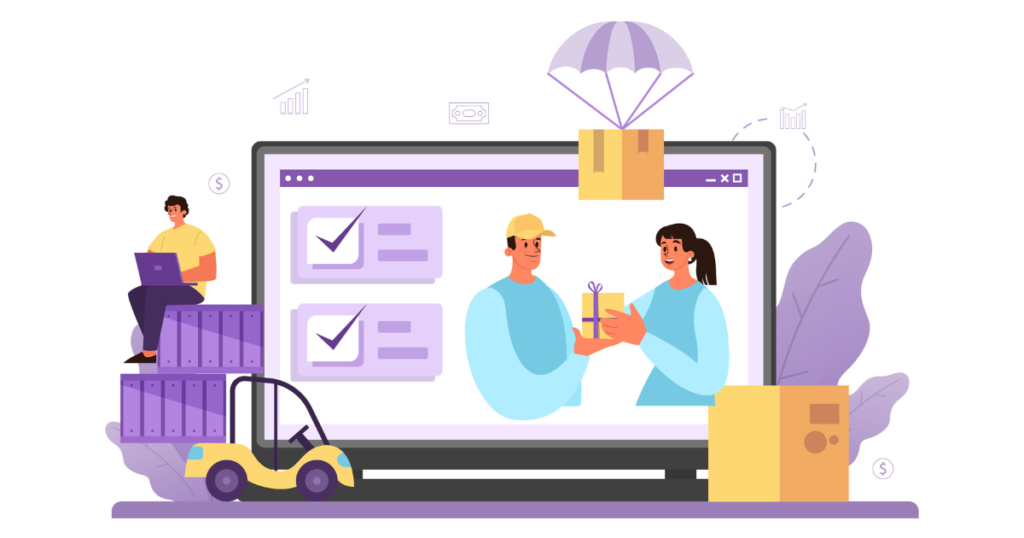
Dropshipping is an e-commerce business model where the store owner sells products without personally storing or shipping inventory.
The process usually looks like this:
Customer → Your Online Store → Supplier → Customer
For example, imagine you create a store selling desk accessories.
A customer visits your website and buys a desk organizer for ₹1,000. You receive the order and payment, then purchase the product from your supplier for ₹600. The supplier ships the product directly to your customer.
Your potential gross margin before advertising, platform fees, taxes, refunds, and other expenses would be ₹400.
| Step | What Happens |
|---|---|
| 1 | Customer discovers your product |
| 2 | Customer places an order |
| 3 | You receive the order details |
| 4 | You place the order with your supplier |
| 5 | Supplier fulfills the order |
| 6 | Customer receives the product |
| 7 | You handle customer support |
The important thing to understand is that you are not simply selling a product—you are building the customer experience around it.
Why Are People Interested in Dropshipping?
One reason dropshipping attracts beginners is the possibility of starting without buying a large amount of inventory upfront.
Traditional retail often requires you to purchase products, store them, manage stock, and arrange fulfillment.
Dropshipping can reduce some of those inventory responsibilities.
| Traditional E-Commerce | Dropshipping |
|---|---|
| Buy inventory upfront | Order products as customers purchase |
| Store products yourself | Supplier stores inventory |
| Manage stock | Supplier generally manages stock |
| Pack orders yourself or use fulfillment | Supplier generally handles fulfillment |
| Higher inventory risk | Lower upfront inventory commitment |
| More control over fulfillment | Less control over fulfillment |
However, lower inventory risk does not mean zero business risk.
You can still lose money through advertising, poor product choices, refunds, payment fees, supplier problems, or weak marketing.
How to Start a Dropshipping Business
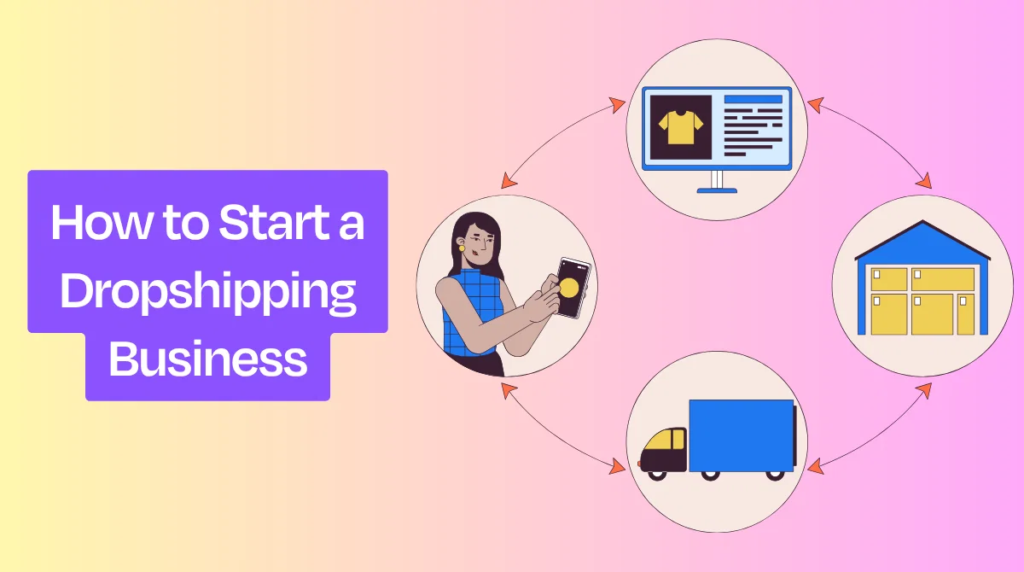
Starting a dropshipping business becomes much easier when you break it into small steps.
You don’t need to figure everything out in one afternoon.
Start with the foundation.
1. Choose a Niche
A niche is a focused area of the market.
Instead of creating a store that sells “everything,” you could focus on a specific audience or product category.
Examples include:
- Home organization
- Pet accessories
- Fitness accessories
- Travel products
- Desk and office accessories
- Hobby products
- Kitchen tools
- Beauty accessories
- Outdoor products
A good niche should have real customer interest and enough products to build a useful store.
Don’t choose a niche simply because someone online claims it is “the next big thing.”
Ask yourself:
Would people actually pay for these products?
That simple question can save you a lot of time.
2. Research Products Carefully
Product research is one of the most important parts of dropshipping.
A product may look fantastic in a supplier’s photo but fail to attract customers—or create complaints after purchase.
Look for products that solve a problem, create convenience, or offer something genuinely interesting.
| Product Factor | What to Look For |
|---|---|
| Demand | People are actively interested in it |
| Competition | Competition exists but isn’t impossible |
| Price | Enough room for business expenses and profit |
| Quality | Reliable and consistent product quality |
| Shipping | Reasonable delivery options |
| Reviews | Evidence of customer satisfaction |
| Problem-solving | Product provides a clear benefit |
Don’t fall in love with a product just because it looks cool.
Think like a customer.
Would you stop scrolling for it? Would you understand its benefit quickly? Would you trust a store selling it?
3. Find a Reliable Supplier
Your supplier can make or break the customer experience.
If products arrive late, damaged, incorrectly packaged, or completely different from what customers expected, your store receives the blame—even when you didn’t physically ship the product.
Before committing to a supplier, research:
- Product quality
- Shipping times
- Customer reviews
- Communication
- Return policies
- Order processing
- Inventory availability
- Product consistency
If possible, order samples yourself.
Holding the product in your hands tells you things that a product listing cannot.
You might notice the packaging feels cheap, the product is smaller than expected, or the instructions are confusing.
Those small details matter.
4. Build a Professional Online Store
Your store doesn’t need to look like a giant corporation.
But it should look clean, trustworthy, easy to navigate, and honest.
Make sure your website includes:
- Clear product photos
- Simple product descriptions
- Easy navigation
- Pricing information
- Shipping details
- Return and refund information
- Contact information
- Secure checkout
- Frequently asked questions
Avoid filling every corner with pop-ups and flashing messages.
Sometimes simple sells better than complicated.
A customer should be able to understand what you’re selling within a few seconds.
5. Write Product Descriptions Like a Human
One common dropshipping mistake is copying the supplier’s product description word for word.
That often creates boring, robotic content.
Instead of saying:
“This premium multifunctional ergonomic product provides superior functionality.”
Tell people what the product actually does.
For example:
“Keep your desk tidy without constantly searching for your pens, cables, and small accessories.”
That’s clearer.
Your product description should answer three simple questions:
- What is it?
- Why might I need it?
- How can it make my life easier?
Focus on benefits, not just specifications.
6. Set a Realistic Price
Pricing is more than adding a percentage to the supplier’s cost.
You need to consider your complete business expenses.
For example:
| Expense | Example |
|---|---|
| Product cost | ₹500 |
| Shipping | ₹100 |
| Payment/platform fees | ₹50 |
| Advertising cost per sale | ₹200 |
| Other costs | ₹50 |
| Total estimated cost | ₹900 |
| Selling price | ₹1,299 |
| Potential amount left | ₹399 |
These numbers are only an example. Your actual costs can be very different.
The lesson is simple: know your numbers before celebrating a sale.
Revenue sounds exciting.
Profit is what keeps the business alive.
7. Create a Marketing Strategy
A beautiful store means very little if nobody visits it.
This is where marketing becomes important.
You can explore different channels, including:
- Search engine optimization
- Social media marketing
- Short-form video
- Influencer marketing
- Email marketing
- Paid advertising
- Content marketing
- Community building
You don’t have to master every channel immediately.
Start with one or two channels that match your audience.
If your customers spend their time watching short videos, short-form content may make sense.
If they search Google for solutions, SEO may be valuable.
Marketing works better when you understand where your customers naturally spend their attention.
8. Use Content to Build Trust
People don’t automatically trust a new online store.
And honestly, why should they?
They don’t know you yet.
Content can help bridge that gap.
Instead of constantly saying “Buy this product!”, create useful content around the problems your products solve.
For example, if you sell travel accessories, you could create content such as:
- Travel packing tips
- How to organize a small suitcase
- Common travel mistakes
- Useful accessories for long flights
- Carry-on organization ideas
Now you’re not just selling.
You’re helping.
And helpful content can make a brand feel more human.
9. Provide Good Customer Service

This is the part many new entrepreneurs underestimate.
A customer may forgive a small delay if you communicate honestly.
They are much less likely to forgive being ignored.
Respond clearly and politely when customers have questions about:
- Shipping
- Orders
- Returns
- Refunds
- Product problems
- Delivery delays
Sometimes a simple message such as “I’m checking this for you and will update you shortly” can make a big difference.
Good customer service turns a transaction into a relationship.
Common Dropshipping Mistakes to Avoid
Dropshipping has opportunities, but it also has plenty of traps.
| Mistake | Better Approach |
|---|---|
| Choosing products randomly | Research demand and competition |
| Copying supplier descriptions | Write original customer-focused content |
| Ignoring shipping times | Clearly communicate delivery expectations |
| Spending heavily on ads immediately | Test small and measure results |
| Using poor-quality products | Order samples first |
| Expecting instant income | Treat it as a real business |
| Selling everything | Build a focused niche |
| Ignoring customer complaints | Respond quickly and professionally |
| Chasing every trend | Look for sustainable demand |
| Forgetting expenses | Track revenue, costs, and profit |
One of the biggest mistakes is expecting dropshipping to be easy passive income.
It isn’t.
You are still responsible for the brand, marketing, customer experience, product selection, and many business decisions.
How Much Money Do You Need to Start Dropshipping?
There isn’t one universal starting amount.
Your costs can include:
- Store setup
- Domain
- Product samples
- Marketing
- Advertising
- Software
- Payment processing
- Business registration or compliance costs where applicable
You can keep initial costs controlled by testing before scaling.
Instead of ordering hundreds of products, test demand.
Instead of spending a huge advertising budget immediately, start cautiously.
The goal isn’t to look like a big business on day one.
The goal is to learn what customers actually want.
How Long Does It Take to Make Money With Dropshipping?
There is no guaranteed timeline.
Some stores may generate sales quickly, while others take months of testing and improvement.
Your results can depend on:
- Product selection
- Marketing
- Pricing
- Website quality
- Customer demand
- Competition
- Advertising efficiency
- Supplier reliability
- Your ability to adapt
Think of your first stage as a learning period.
Your first product might fail.
Your first advertisement might perform badly.
Your first website may need major improvements.
That’s normal.
Failure isn’t always a closed door; sometimes it is simply information pointing you toward a better path.
How to Make Dropshipping More Successful
If you want to build something sustainable, focus on these principles:
Solve a real problem.
People buy solutions, convenience, experiences, and outcomes—not just objects.
Build trust.
Clear policies, honest descriptions, quality products, and responsive support matter.
Test before scaling.
Don’t assume something will work. Let customer behavior provide the answer.
Watch your numbers.
Track sales, expenses, conversion rates, refunds, and advertising performance.
Keep improving.
Your first version doesn’t need to be perfect.
A tree doesn’t grow overnight. Your business may be the same. Small improvements repeated over time can create something much stronger than one big burst of effort.
A Simple Dropshipping Plan for Beginners
If you’re feeling overwhelmed, keep your first plan simple.
| Stage | Focus |
|---|---|
| Week 1 | Choose a niche and research customers |
| Week 2 | Research products and suppliers |
| Week 3 | Build your store and product pages |
| Week 4 | Create content and begin marketing |
| After launch | Track results and improve |
| Ongoing | Test, learn, serve customers, and grow |
The exact timeline can vary. Don’t treat this as a rigid formula.
Your real goal is to move from idea → research → testing → learning → improvement.
Is Dropshipping Still Worth Considering?

Dropshipping can be worth considering if you approach it as a real e-commerce business rather than a shortcut to instant money.
The business model can make it easier to test products without holding large amounts of inventory yourself, but success still depends on execution.
You need patience.
You need curiosity.
You need the willingness to look at something you created and admit, “This isn’t working yet. What can I change?”That mindset is valuable far beyond dropshipping.
FAQ’S
1. What is dropshipping?
Dropshipping is an e-commerce business model where you sell products online without keeping inventory yourself. A supplier typically stores and ships the product directly to the customer.
2. How does dropshipping work?
A customer orders from your online store, you send the order to your supplier, and the supplier fulfills it. Your potential profit comes from the difference between your selling price and your total business costs.
3. Is dropshipping good for beginners?
Yes, it can be a starting point for beginners because you don’t necessarily need to purchase large amounts of inventory upfront. However, it still requires research, marketing, customer service, and consistent effort.
4. How much money do I need to start dropshipping?
There is no fixed amount. Your starting costs can include a website, domain, product samples, marketing, advertising, software, and payment fees.
5. How do I choose a profitable dropshipping niche?
Look for a niche with genuine customer demand, useful products, manageable competition, and reasonable profit potential. Avoid choosing a niche only because it is trending.

Wearable Technology: Smart Devices Shaping the Future of Everyday Life
Technology has become something we carry everywhere. Our phones are in our pockets, laptops sit…

Transformative Biotech and Health Tech: Smart Innovations for Better Health
From smartwatches that count our steps to advanced laboratories studying genes and diseases, Biotechnology makes…

Business Planning & Strategy: From Idea to Business Growth
Starting a business often begins with a simple thought: “What if I turn this idea…

Proven Strategies to Boost Content Performance and Growth
Creating Content takes time. You choose a topic, write the article, Content make images, create…

The Ultimate Practical Guide to Personal Growth
Personal growth is not about becoming a completely different person. It is about understanding yourself…

How to Build a Creator Business and Make Money Online
Creating content online used to sound like something only famous Business YouTubers, influencers, or celebrities…