

Every single day, millions of people log onto the internet searching for answers, entertainment, or products. Whether you are scrolling through a detailed blog post, reading an insightful product review, scanning a social media update, or opening a weekly newsletter, you are constantly consuming written digital material. At its core, content writing is the thoughtful process of planning, drafting, editing, and publishing digital text tailored specifically for an online audience.
A skilled writer serves as the vital bridge connecting complex ideas to everyday readers. Unlike traditional academic writing or formal reporting, digital content writing focuses on delivering instant value to the reader while simultaneously helping a business, platform, or creator reach their long-term growth goals.
+-------------------------------------------------------------------------+
|                    THE CORE PURPOSE OF DIGITAL CONTENT                  |
+-------------------------------------------------------------------------+
|  1. Solve Problems       ---> Give readers direct, actionable answers   |
|  2. Build Connection     ---> Speak authentically in a human voice      |
|  3. Boost Discovery      ---> Help search engines rank your page high   |
|  4. Drive Engagement     ---> Turn casual visitors into loyal readers   |
+-------------------------------------------------------------------------+
When you approach writing with genuine human empathy, your work naturally stands out. Readers do not just consume your words—they bookmark your articles, trust your advice, and share your insights with others.
Why Quality Writing Drives Business Success

In a digital landscape flooded with noisy advertisements and pop-ups, modern readers have developed a sharp filter for corporate jargon. People no longer want to be aggressively sold to; instead, they want to be informed and guided. That is precisely why high-quality content writing has become an essential pillar for modern brands and online businesses:
- Attracting Organic Search Traffic: Search engines prioritize websites that regularly produce clear, well-structured guides. Publishing helpful articles draws in targeted, curious readers without relying exclusively on paid advertisements.
- Building Audience Trust: Trust is earned by consistently providing real value. When a brand offers honest explanations and helpful insights, it builds lasting digital credibility.
- Improving On-Page Engagement: Engaging, conversational writing holds a reader’s attention, keeping them on your website longer and reducing page bounce rates.
- Supporting Marketing Campaigns: From email newsletters to social updates, clear brand messaging forms the essential foundation of every effective marketing strategy.
Exploring the Major Types of Content Writing
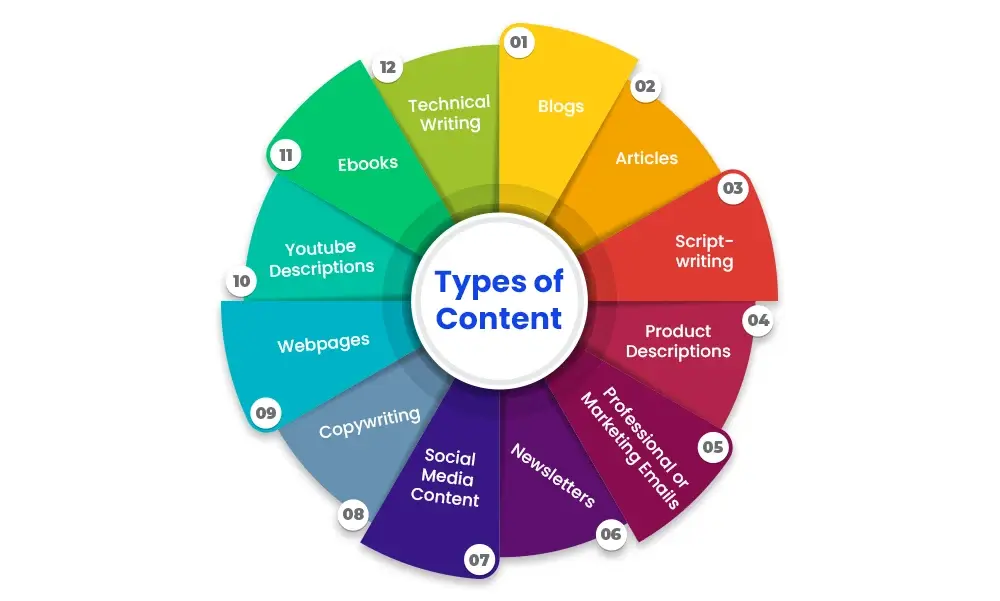
Digital writing is not a uniform discipline. Depending on the platform, goal, and target audience, writing styles adapt into distinct specialized formats:
| Content Format | Primary Goal | Tone & Structure |
|---|---|---|
| Blog Articles | Educate readers and rank on search engines | Conversational, structured, highly skimmable |
| Website Pages | Introduce a company and its offerings | Direct, clear, professional, brand-focused |
| SEO Content | Answer specific online search queries | Highly structured, natural keyword use, direct |
| Social Posts | Spark conversations and drive shares | Short, punchy, engaging, visual-friendly |
| Product Copy | Highlight features and consumer benefits | Persuasive, clear, outcome-oriented |
| Email Letters | Maintain direct, personal communication | Warm, personal, immediate, concise |
1. Blog Writing
Blog posts form the backbone of online publishing. Writers create comprehensive guides, practical tutorials, and industry breakdowns. The goal is to ensure every reader leaves with clear, actionable insights they can use immediately.
2. Website Copy
Core pages like the Home Page, About Us, and Services act as a company’s virtual storefront. Great website copy cuts out unnecessary filler and explains clearly what you do and how you help your clients.
3. SEO Content Writing
Search Engine Optimization (SEO) content balances human readability with search algorithm standards. An SEO content writer organizes information logically so search engines can easily index the article and present it to active searchers.
4. Social Media Content
Writing for fast-moving social channels requires capturing attention within seconds. It demands compelling hooks, relatable stories, and clear calls to action that encourage comments and shares.
5. Product Descriptions
Persuasive product copy highlights more than just technical specifications. It paints a clear picture of how a product solves a daily problem for the buyer.
6. Email Content
Email remains one of the most personal communication channels online. Effective email writers treat the reader’s inbox with respect by delivering focused tips, news updates, and exclusive insights.
Essential Skills Every Successful Writer Needs

You do not need a literature degree to become a successful content writer. In fact, complex academic phrasing often gets in the way of clear communication. Mastering these core practical skills will set you up for success:
- Writing with Simple Clarity: Avoid complicated jargon. The best digital writing feels like a clear conversation with a knowledgeable peer.
- Thorough Research Habits: Great writing rests on solid research. You must know how to verify facts, digest complex data, and explain findings simply.
- Empathy for the Audience: Always place yourself in the reader’s position. Focus on their immediate questions, frustrations, and goals.
- Basic Search Engine Knowledge: Understanding search intent helps you structure your writing so that people can find your work online.
- Disciplined Self-Editing: Polishing your initial draft by cutting out wordy sentences transforms rough ideas into sharp, professional content.
- Adaptability in Tone: A great writer easily shifts between a lighthearted tone for lifestyle blogs and a precise, formal tone for professional platforms.
A Step-by-Step Roadmap for Beginners
Starting a career or hobby in writing can feel daunting with so much advice available online. Following a structured step-by-step path helps keep your learning focused and manageable:
+--------------------------------------------------------------------------+
|                     PRACTICAL WRITING ROADMAP                            |
+--------------------------------------------------------------------------+
|  Step 1: Master clear sentence structure and simple formatting           |
|  Step 2: Pick two or three topic areas you genuinely enjoy               |
|  Step 3: Establish a consistent daily writing routine                    |
|  Step 4: Learn basic search engine optimization principles               |
|  Step 5: Assemble a portfolio featuring 3-5 polished samples             |
|  Step 6: Connect with potential clients, editors, and peer writers       |
+--------------------------------------------------------------------------+
Step 1: Master the Fundamentals
Focus on writing short sentences, using active voice, and breaking dense paragraphs into readable chunks. Clean formatting makes your work accessible on mobile screens.
Step 2: Choose Your Initial Topics
Selecting specific topics—such as technology, personal health, finance, or travel—allows you to build deeper expertise and write with genuine authority.
Step 3: Practice Writing Daily
Consistency accelerates your growth faster than anything else. Practice drafting short articles, sharing updates on professional platforms, or maintaining a personal blog to build writing stamina.
Step 4: Learn Basic On-Page SEO
Study how users search for information online. Practice using logical headings, clear subheadings, and descriptive titles to make your content easy for algorithms to index.
Step 5: Build a Clean Portfolio
Create three to five high-quality sample pieces showcasing your best work. Store them in a simple digital folder or on a basic portfolio website to share with prospective clients.
Step 6: Network and Pitch
Reach out to agency owners, business leaders, and publication editors. Presenting your samples with clear, confident communication helps you land writing opportunities.

A common challenge in digital publishing is balancing algorithm requirements with genuine human interest. The golden rule is simple: always write for human beings first.
Modern search engines are designed to identify and reward text that truly helps people. Here is how to keep your writing search-friendly while preserving a natural voice:
- Answer Questions Early: Place direct answers near the top of your article. Readers appreciate getting core information quickly without scrolling through long intros.
- Use Keywords Naturally: Include relevant search terms naturally where they make sense contextually. Never force keywords into sentences if they disrupt smooth reading flow.
- Design for Skimmability: Use descriptive headings, bullet points, and bold key terms so readers scanning the page can locate key insights instantly.
- Cite Helpful Resources: Include links to authoritative external sources and internal guides to give your readers added research value.
Career Paths in the Writing Industry
Building strong content creation skills opens up diverse career opportunities across industries:
- In-House Writer: Work directly within an organization, shaping the company’s dedicated blog, email updates, and brand messaging.
- Agency Specialist: Join a digital marketing team producing creative assets for a diverse portfolio of client accounts.
- Freelance Content Creator: Run an independent writing business, managing your own project schedule, client relationships, and remote work lifestyle.
- Content Editor or Strategist: Advance into editorial management, where you plan long-term publishing schedules, review drafts, and lead writing teams.
Frequently Asked Questions
How does content writing differ from traditional copywriting?
Content writing focuses primarily on educating, informing, and engaging readers over time, whereas copywriting concentrates on encouraging immediate sales actions or sign-ups.
Can beginners build a successful writing career without prior experience?
Yes. By practicing regularly, studying basic digital marketing principles, and building a solid sample portfolio, beginners can transition into professional writing roles.
Are paid software tools required to begin writing?
No specialized software is required. You can produce high-quality work using free document editors, basic grammar checkers, and standard web browsers.