
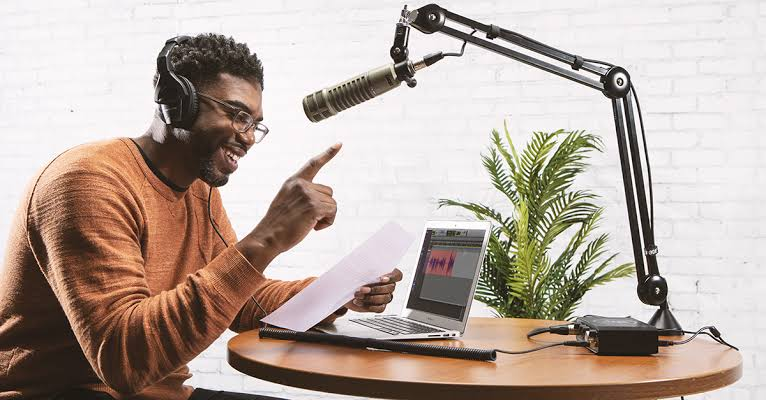
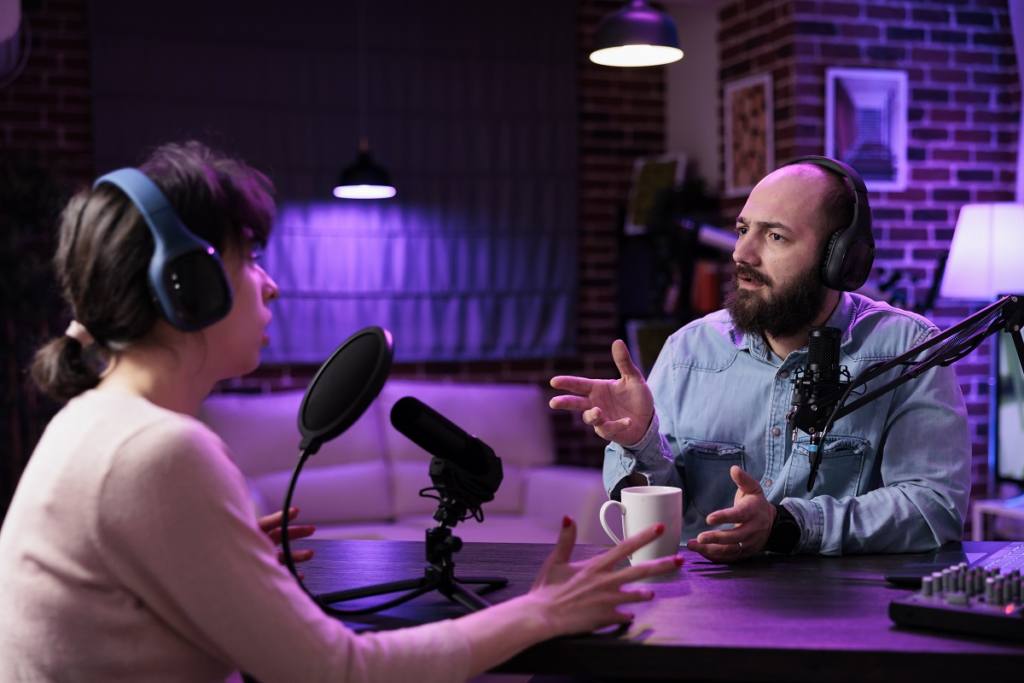
A podcast is more than a microphone and a recording buttonContent. At its heart, it is a conversation between people, even when the listener is hearing it later through headphones while walking, driving, cooking, or relaxing at home.
Starting a podcast can seem intimidating in the beginning. You may wonder what equipment to buy, what to talk about, how to record an episode, or whether anyone will listen.
Take a breath.
You do not need to have everything figured out before you start.
Many good podcasts begin with a simple idea and one person willing to press “record.”
This guide will walk you through the basics of podcast content, from choosing a topic and planning episodes to recording, publishing, promoting, and gradually improving your show.
What Is Podcast Content?
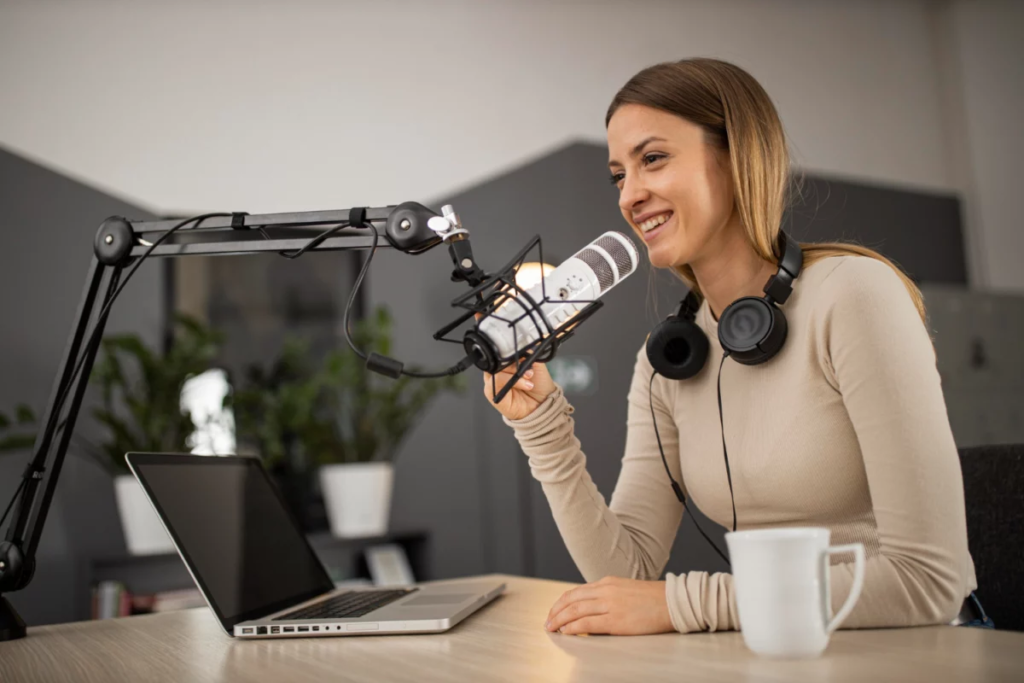
Podcast content is the information, stories, conversations, interviews, opinions, education, or entertainment shared through podcast episodes.
A podcast can be highly produced or wonderfully simple.
Some shows have several hosts, sound effects, music, and detailed editing. Others are simply one person sitting down with a microphone and having an honest conversation.
The best format depends on your topic, personality, audience, and goals.
| Podcast Content Type | Example |
|---|---|
| Solo podcast | One host sharing ideas or knowledge |
| Interview podcast | Host talks with guests |
| Co-hosted podcast | Two or more people discuss a topic |
| Storytelling podcast | Personal or researched stories |
| Educational podcast | Lessons, explanations, or advice |
| News & commentary | Discussion of current topics |
| Business podcast | Industry insights and conversations |
| Entertainment podcast | Humor, opinions, games, or discussions |
There is no single formula for a successful podcast.
What matters most is creating something worth listening to.
Why Start a Podcast?
People start podcasts for many different reasons.
You might want to build a personal brand, promote a business, teach others, share experiences, or simply create something you enjoy.
Some common reasons include:
- Sharing knowledge
- Building a community
- Connecting with interesting people
- Growing a personal brand
- Supporting an existing business
- Exploring a passion
- Building communication skills
- Creating another content channel
- Potentially earning money
But do not feel pressured to turn your podcast into a business immediately.
Sometimes the best place to start is simply with a topic you genuinely enjoy talking about.
When you care about the subject, your enthusiasm tends to come through in your voice.
Choose a Clear Podcast Topic
Before buying equipment, decide what your podcast will be about.
This sounds simple, but it is one of the most important decisions you will make.
A broad topic like “life” gives you endless possibilities, but it can also make it difficult for listeners to understand why they should follow your show.
Instead, give your podcast a clearer direction.
For example:
| Broad Topic | More Focused Podcast Idea |
|---|---|
| Fitness | Simple fitness habits for busy professionals |
| Business | Small-business lessons for first-time entrepreneurs |
| Technology | Everyday technology explained simply |
| Travel | Affordable travel experiences and practical tips |
| Books | Conversations about books and personal growth |
| Food | Easy home cooking for beginners |
| Personal Growth | Realistic habits for becoming more productive |
A focused topic does not mean every episode has to sound identical.
Think of your podcast topic as the tree trunk. Your individual episodes are the branches.
There can be plenty of branches while the main idea remains clear.
Know Who You Are Talking To

Before creating episodes, imagine your ideal listener.
Ask yourself:
- What are they interested in?
- What problems do they have?
- What questions do they ask?
- What kind of stories would they enjoy?
- What could they learn from your podcast?
- Why would they come back for another episode?
You do not need to create a complicated audience profile.
Just picture a real person.
Imagine they are listening while drinking their morning coffee or taking an evening walk.
What would make them stop and keep listening?
That simple question can improve your content dramatically.
Choose the Right Podcast Format
Your format determines how your episodes are structured.
You can choose one format or combine several.
Solo Podcast
You are the main voice of the show.
This format is useful if you enjoy explaining ideas, teaching, telling stories, or sharing personal experiences.
Advantages:
- Simple scheduling
- Full creative control
- No guest coordination
- Easy to build your personal voice
Interview Podcast
You invite guests and have conversations with them.
This can be a great format for learning from experts, entrepreneurs, creators, authors, or people with interesting experiences.
The key is to avoid asking questions that sound like they came from a generic questionnaire.
Be curious.
If your guest says something interesting, follow that thread.
The best interview moments often happen when the conversation moves somewhere unexpected.
Co-Hosted Podcast
Two or more hosts discuss a subject together.
This can create natural energy because the hosts can react to one another.
However, good chemistry matters.
Listeners can usually tell when a conversation feels forced.
Create Podcast Episodes People Want to Hear
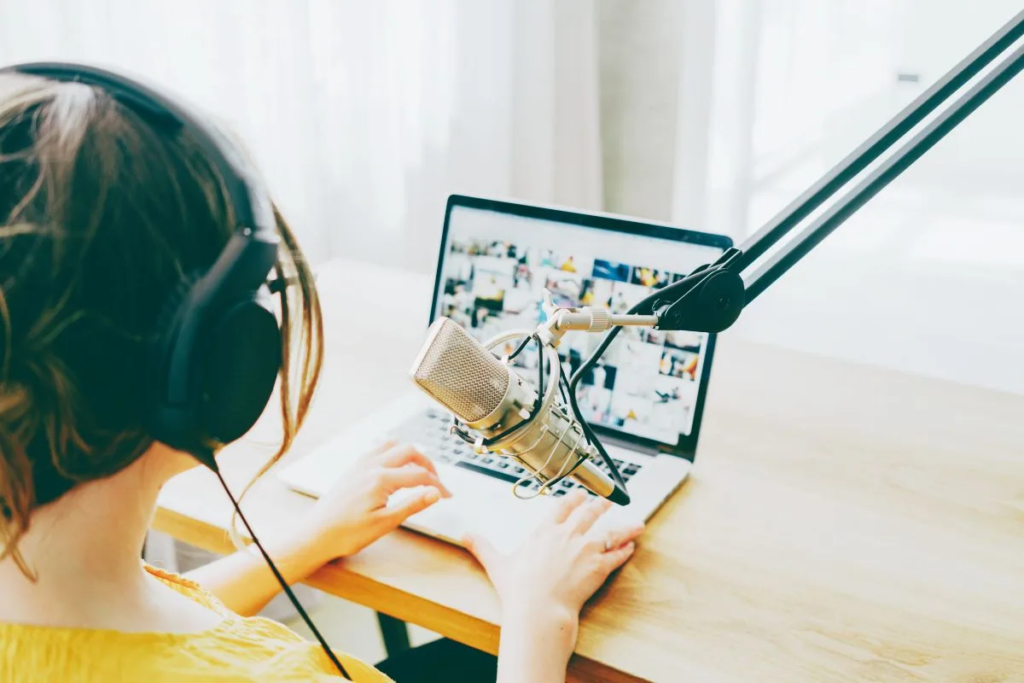
A podcast episode does not need to be complicated.
A simple structure can work extremely well.
| Section | Purpose |
|---|---|
| Opening | Introduce the topic and create interest |
| Introduction | Explain what the episode is about |
| Main Content | Share the conversation, story, or information |
| Key Takeaways | Highlight useful points |
| Closing | Wrap up naturally |
| Call to Action | Tell listeners what to do next |
For example, if your episode is called “How to Stop Procrastinating,” you might begin with a relatable situation:
“You sit down to work, open your laptop, check one message, scroll for five minutes—and suddenly half an hour is gone.”
That feels familiar.
The listener thinks, “I’ve done that.”
And now you have their attention.
Find Good Podcast Topics and Ideas
Running out of ideas is one of the biggest fears new podcasters have.
The good news is that ideas are everywhere if you pay attention.
Look at:
- Questions people ask you
- Comments on your content
- Common problems in your niche
- Personal experiences
- Industry discussions
- Books you have read
- Lessons you have learned
- Mistakes you have made
- Conversations with friends
- Questions from your audience
Keep an idea list.
When a topic suddenly crosses your mind, write it down.
Do not trust yourself to remember it later.
A small note today can become a great episode next month.
How to Plan a Podcast Episode
You do not always need a word-for-word script.
For many podcasters, an outline creates a more natural conversation.
Try something like this:
Episode Topic: How to Build Better Morning Habits
Opening: Why mornings often feel rushed
Point 1: Prepare the night before
Point 2: Avoid checking your phone immediately
Point 3: Create a realistic routine
Point 4: Give yourself time to adjust
Closing: One small habit listeners can try tomorrow
This gives you structure without making you sound like you are reading from a textbook.
Script vs. Outline
| Approach | Best For |
|---|---|
| Full script | Narration, storytelling, educational episodes |
| Detailed outline | Structured solo episodes |
| Bullet points | Casual conversations |
| No script | Experienced conversational hosts |
For beginners, a simple outline is often a comfortable middle ground.
What Equipment Do You Need for a Podcast?
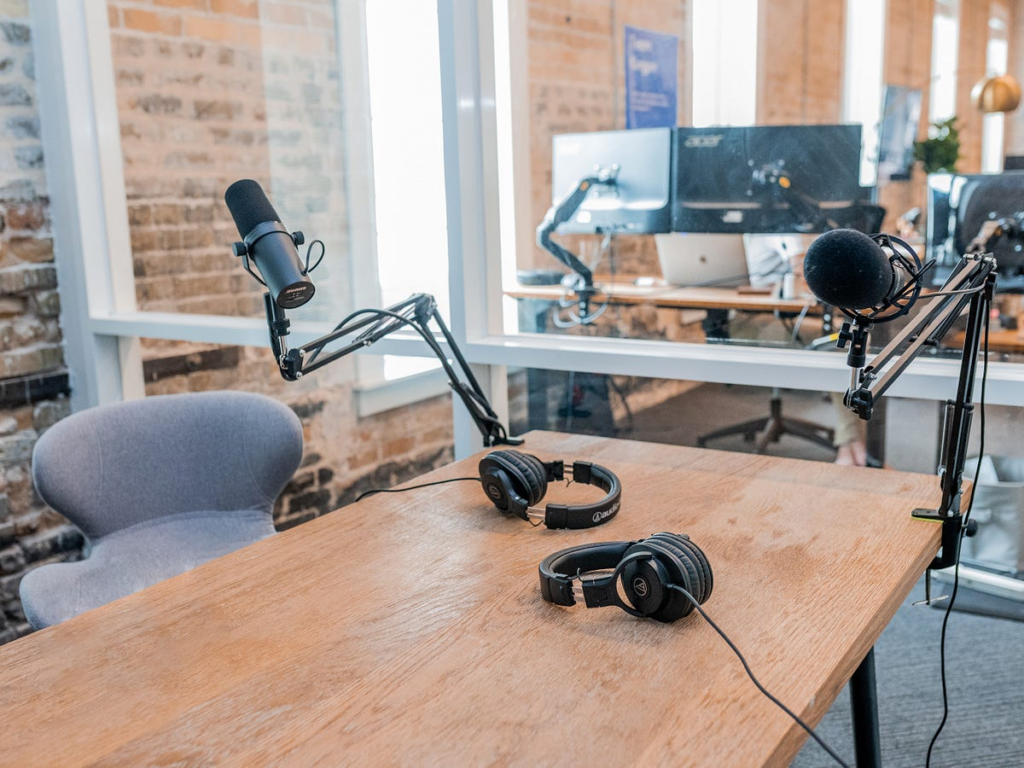
You do not need a professional studio to begin.
A basic setup can include:
- Microphone
- Headphones
- Computer or smartphone
- Recording software
- Quiet recording space
The microphone matters, but your environment matters too.
A quiet room with soft furnishings can often produce a better recording than a beautiful room filled with hard surfaces that create echoes.
Before buying expensive equipment, learn how to create good content.
You can always improve your setup later.
| Beginner Need | Purpose |
|---|---|
| Microphone | Captures your voice |
| Headphones | Helps monitor sound |
| Recording software | Records and edits audio |
| Quiet space | Reduces unwanted noise |
| Podcast hosting service | Stores and distributes episodes |
How to Record Your First Podcast
Your first recording may feel strange.
You might suddenly become very aware of your voice.
You may speak too quickly.
You may forget what you wanted to say.
You may listen to the recording afterward and think:
“Do I really sound like that?”
Almost everyone goes through some version of this.
Give yourself permission to be a beginner.
Before recording:
- Find a quiet place.
- Test your microphone.
- Put your phone on silent.
- Keep your episode outline nearby.
- Take a few deep breaths.
- Speak naturally.
- Record a short test before starting.
Do not chase perfection.
Clear, comfortable, authentic speech is more valuable than sounding overly polished.
Podcast Editing Basics
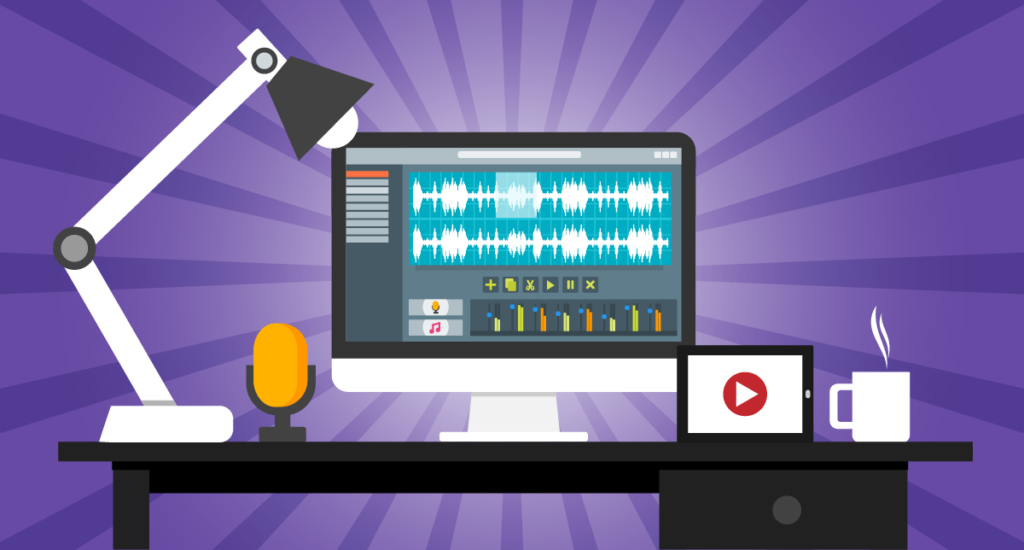
Editing helps remove distractions and improve the listening experience.
For beginners, you can focus on the basics:
- Remove long pauses
- Cut obvious mistakes
- Reduce distracting background noise
- Adjust volume
- Add simple intro or outro music if appropriate
- Keep the pacing comfortable
You do not need to remove every breath or tiny pause.
A little natural imperfection can make a podcast feel human.
After all, people are listening to a person—not a machine.
Create a Strong Podcast Introduction
The opening moments matter.
Instead of beginning every episode with a long introduction about yourself, give listeners a reason to care about the episode.
For example:
Weak approach:
“Hello everyone, welcome to another episode. My name is…”
Stronger approach:
“Have you ever started a morning routine with excitement, only to abandon it three days later? Today, let’s talk about why that happens and what you can do differently.”
The second approach immediately creates curiosity.
Your introduction should answer one simple question:
“Why should I keep listening?”
How Long Should a Podcast Episode Be?
There is no perfect podcast length.
An episode should be as long as it needs to be to deliver value without unnecessary repetition.
Some episodes may be 15 minutes.
Others may be 45 minutes or more.
Do not stretch a 20-minute idea into an hour simply because you think longer content looks more professional.
| Episode Length | Possible Use |
|---|---|
| 10–20 minutes | Quick tips and focused discussions |
| 20–40 minutes | Educational or conversational episodes |
| 40–60 minutes | Interviews and deeper discussions |
| 60+ minutes | Long-form conversations and detailed topics |
The real goal is not duration.
The goal is a satisfying listening experience.
How to Keep Podcast Listeners Engaged
People have countless things competing for their attention.
To keep your podcast interesting:
- Tell stories
- Ask thoughtful questions
- Use real examples
- Avoid unnecessary repetition
- Change your pace naturally
- Share useful takeaways
- Let your personality come through
- Keep the conversation focused
Imagine you are talking to one person rather than performing for a huge crowd.
That small mental shift can make your voice sound warmer and more natural.
How to Promote a New Podcast
Creating an episode is only half the journey.
People need a way to discover it.
You can promote your podcast through:
- Social media
- Short video clips
- Blog posts
- Email newsletters
- Online communities
- Guest appearances
- Your existing website
- Collaborations with other creators
You can also turn one podcast episode into several pieces of content.
For example:
One 40-minute podcast →
- 3 short video clips
- 5 social media posts
- 1 blog article
- 1 email newsletter
- Several quote graphics
This is called content repurposing, and it can save you a great deal of time.
How to Build a Consistent Podcast
Consistency does not mean publishing every day.
It means creating a schedule that fits your life.
If you can comfortably produce one episode every week, great.
If every two weeks works better, that can be perfectly reasonable too.
| Schedule | Best For |
|---|---|
| Weekly | Consistent audience building |
| Every 2 weeks | Busy creators |
| Monthly | Deep-dive or highly researched shows |
| Seasonal | Projects with larger production needs |
Choose a schedule you can maintain without burning yourself out.
A sustainable rhythm is better than an ambitious schedule you cannot keep.
Common Podcasting Mistakes Beginners Should Avoid

Your early episodes are a learning experience.
Still, avoiding a few common mistakes can make the journey easier.
| Common Mistake | Better Approach |
|---|---|
| Buying expensive equipment immediately | Start with basic equipment |
| Talking about too many unrelated topics | Choose a clear focus |
| Writing overly complicated scripts | Use simple outlines when possible |
| Making episodes unnecessarily long | Respect the listener’s time |
| Ignoring audio quality | Record in a quiet space |
| Expecting instant growth | Focus on consistent improvement |
| Copying another podcast | Develop your own personality |
| Publishing without promotion | Share episodes across relevant channels |
How Can a Podcast Make Money?
Podcast monetization usually becomes easier once you have an audience that trusts your content.
Potential income sources include:
- Sponsorships
- Advertising
- Affiliate marketing
- Premium content
- Memberships
- Digital products
- Online courses
- Consulting or coaching
- Selling relevant products or services
However, do not make money your only reason for starting.
If your content is weak, monetization will not magically fix it.
Build something people genuinely want to return to first.
Then think about income.
Listen to your own episodes occasionally.
It may feel uncomfortable at first, but you will notice things you never hear while recording.
Improvement comes from paying attention.
A Simple 30-Day Podcast Starting Plan
If the idea of starting still feels overwhelming, break it into small steps.
| Week | Goal |
|---|---|
| Week 1 | Choose your topic, audience, name, and format |
| Week 2 | Plan your first 3–5 episode ideas |
| Week 3 | Set up equipment and record your first episode |
| Week 4 | Edit, publish, promote, and collect feedback |
You do not need to build everything overnight.
Give yourself room to learn.
FAQ’S
1. How do I start a podcast as a beginner?
Choose a clear topic, identify your target audience, select a format, get basic recording equipment, plan your first episodes, record them, edit the audio, and publish through a podcast hosting platform.
2. What is a podcast?
podcast is a series of digital audio episodes that people can listen to online or through podcast apps. Podcasts can cover education, entertainment, stories, interviews, news, business, hobbies, and many other subjects.
3. What should my first podcast be about?
Choose a topic you genuinely enjoy discussing and understand well. A good starting point is a subject where you can help, entertain, educate, or connect with a specific audience.
4. How do I choose a podcast topic?
Think about your interests, knowledge, experience, and the questions people commonly ask. Look for a topic that gives you enough ideas to create multiple episodes.
5. What are the best podcast formats for beginners?
Common formats include solo podcasts, interviews, co-hosted shows, storytelling, educational podcasts, and discussion-based shows. Choose the format that feels comfortable and suits yo

Wearable Technology: Smart Devices Shaping the Future of Everyday Life
Technology has become something we carry everywhere. Our phones are in our pockets, laptops sit…

Transformative Biotech and Health Tech: Smart Innovations for Better Health
From smartwatches that count our steps to advanced laboratories studying genes and diseases, Biotechnology makes…

Business Planning & Strategy: From Idea to Business Growth
Starting a business often begins with a simple thought: “What if I turn this idea…
Proven Strategies to Boost Content Performance and Growth
Creating Content takes time. You choose a topic, write the article, Content make images, create…

The Ultimate Practical Guide to Personal Growth
Personal growth is not about becoming a completely different person. It is about understanding yourself…

How to Build a Creator Business and Make Money Online
Creating content online used to sound like something only famous Business YouTubers, influencers, or celebrities…