
Let’s start with something simple: having a good product does not automatically mean people will buy it.
You may offer excellent services, competitive prices, and genuinely care about your customers. But if people don’t know who you are or don’t understand why your business is worth their attention, growth can be slow.
This is where marketing and branding come in.
Many business owners think marketing means running advertisements and branding means designing a logo. Those things are part of the process, but the bigger picture is much more interesting.
Branding is about how people remember you. Marketing is about how they discover you.
Think about your own buying habits. When you need something, you probably don’t always choose the first business you see. You may search online, read a few reviews, visit a website, compare options, or ask someone you trust.
That small decision-making process is exactly why marketing matters.
People want to feel confident before spending their money. They want to know, “Can I trust this business?” and “Is this really the right choice for me?”
Good marketing helps answer those questions. Strong branding makes the answers easier to remember.
Branding Is More Than a Logo

A logo is important, but let’s be honest—most people do not become loyal customers because they love a company’s logo.
They remember how the business made them feel.
Imagine two local cafés.
The first café has a beautiful logo, stylish packaging, and an impressive Instagram page. But when you visit, the staff seem uninterested, the service is slow, and the experience feels disappointing.
The second café may have simpler branding, but the staff remember your usual order, the atmosphere feels welcoming, and the experience is consistently good.
Which one would you visit again?
For most people, the answer is obvious.
This is a small but important observation: a brand is not only what a business says about itself. It is also what customers experience and later tell other people.
Your brand includes:
- Your business personality
- Your values
- The way you communicate
- The quality of your service
- Your visual identity
- How you treat customers
- The feeling people associate with your business
In my opinion, one of the biggest branding mistakes is trying too hard to look like a large, famous company. Small businesses often have an advantage—they can feel more personal, more approachable, and more human.
Sometimes, being clear and genuine is far more powerful than trying to sound impressive.
Marketing Is Like Starting a Useful Conversation

Marketing works best when you stop thinking of it as “How can I sell this?” and start thinking, “How can I help the right person understand why this matters?”
That is a big difference.
Imagine meeting someone for the first time. If they immediately start talking only about themselves, you may lose interest.
But if they ask questions, understand your situation, and offer useful advice, the conversation feels different.
Marketing works in a similar way.
Your customers do not always want another advertisement. Sometimes they need an answer, a solution, a little guidance, or simply a reason to trust you.
For example, imagine you own a small skincare business.
Instead of posting:
“Buy our face serum now!”
You could create content explaining:
“How to choose a face serum based on your skin type.”
The second approach still supports your business, but it starts by being helpful.
This is what makes content feel more natural. You are not forcing a sales message into every conversation. You are giving people a reason to listen.
The Difference Between Marketing and Branding
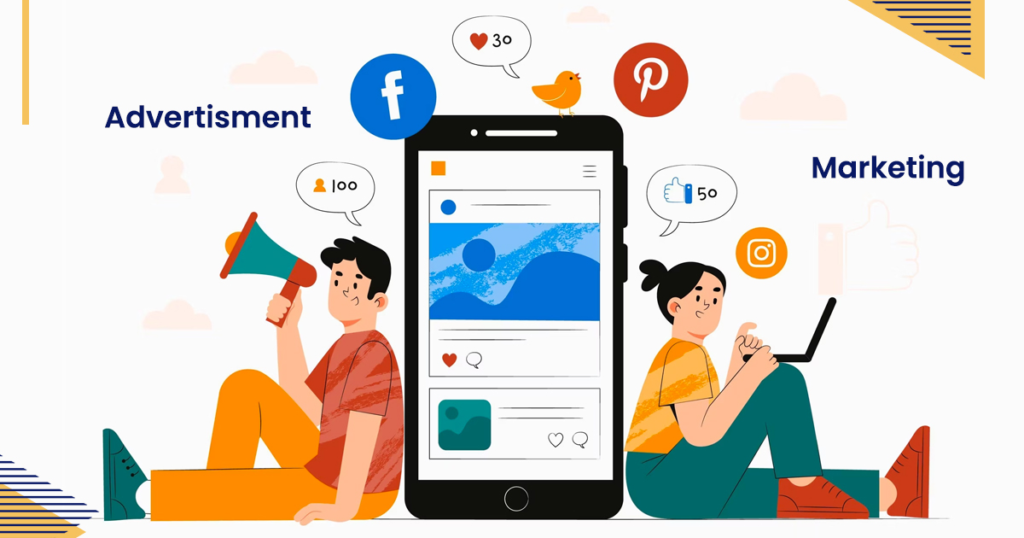
Marketing and branding are closely connected, but they have different jobs.
Branding creates the identity. Marketing carries that identity to people.
| Branding | Marketing |
|---|---|
| Defines who you are | Helps people discover you |
| Builds trust and recognition | Creates awareness and interest |
| Focuses on reputation | Focuses on communication |
| Creates a consistent identity | Encourages people to take action |
| Answers “Why should people remember us?” | Answers “How will people find us?” |
Here is a practical example.
Imagine you run a bakery that wants to be known for fresh, homemade products and friendly service.
Your branding might include warm language, simple packaging, and a welcoming visual style.
Your marketing could include social media posts showing how your products are made, customer stories, baking tips, and updates about new items.
The branding gives the bakery its personality. The marketing helps people experience that personality before they even walk through the door.
Know Who You Are Talking To

One of the easiest mistakes in marketing is trying to attract everyone.
At first, this sounds logical. More people should mean more customers, right?
Not necessarily.
When a message is designed for everyone, it often becomes too general.
For example:
“We provide high-quality services for everyone.”
This does not tell people much.
Now consider:
“We help small business owners improve their online presence and attract more customers.”
The second message immediately feels more relevant to a specific group.
A practical way to understand your audience is to imagine one real person who could benefit from your business.
What are they struggling with?
What questions might they ask before buying?
What worries them?
What would make their decision easier?
This doesn’t mean every customer will be exactly the same. It simply helps you communicate more clearly.
A small observation from everyday marketing: people often care less about your product’s features than about what those features will do for them.
A customer does not just want “fast delivery.” They want to receive their order without waiting for days.
They do not simply want “easy software.” They want to spend less time feeling frustrated.
The more clearly you understand this, the more human your marketing becomes.
Build a Brand That Sounds Like a Real Person

Sometimes businesses make their content sound so professional that it becomes difficult to understand.
Consider this sentence:
“Our innovative solutions are strategically designed to optimize customer outcomes.”
It sounds formal, but what does it actually mean?
Now consider:
“We help businesses solve problems and get better results.”
The message is simple. People understand it immediately.
There is nothing wrong with being professional. But professional does not have to mean complicated.
A useful test is to read your content aloud.
Ask yourself:
“Would I actually say this to a customer in a normal conversation?”
If the answer is no, you may need to simplify it.
Use natural phrases. Explain ideas clearly. Avoid adding difficult words simply to sound knowledgeable.
People appreciate businesses that respect their time and communicate clearly.
Create Content That People Actually Want to Read

Let’s be realistic: not every piece of content needs to become a viral success.
Sometimes businesses become so focused on likes, views, and followers that they forget to ask whether their content is genuinely useful.
A blog post with 500 interested readers may be more valuable than a social media post with thousands of views from people who will never become customers.
Before creating content, ask:
What is my audience trying to understand?
What problem can I help solve?
What would I personally find useful if I were in their situation?
You can create:
- Helpful blog articles
- Simple how-to guides
- Videos that explain common problems
- Customer stories
- Behind-the-scenes content
- Frequently asked questions
- Practical tips
One of the most relatable ways to create better content is to pay attention to the questions customers already ask.
If five customers ask the same question, there is a good chance other people are wondering about it too.
That question could become a blog post, video, social media post, or email.
In other words, your customers often give you your best content ideas—you just need to listen.
Build Trust Before Expecting a Sale

Trust rarely happens instantly.
Someone may first discover your business through a search result. Later, they might read another article, visit your website, check reviews, or follow you on social media.
Each interaction adds another small piece to the bigger picture.
This is why consistency matters.
You do not need to post twenty times a day. You do not need to send emails constantly.
In my opinion, being useful once a week is often better than being noisy every day.
Trust can be built through simple actions:
- Answer questions honestly
- Keep your promises
- Show real customer experiences
- Be transparent about pricing or processes
- Respond respectfully when problems happen
- Provide consistent quality
Nobody expects a business to be perfect.
But people do notice how a business behaves when something goes wrong.
Sometimes, a well-handled problem can create more trust than a situation where everything appeared perfect from the beginning.
Choose Marketing Channels That Make Sense

Choose Marketing Channels Based on Reality
You do not need to be active everywhere.
This is something many businesses learn the hard way.
Creating content for every social media platform, running advertisements, writing blogs, sending emails, and producing videos can quickly become overwhelming.
Instead, start with the question:
“Where are the people I want to reach already spending their time?”
| Marketing Channel | Practical Use |
|---|---|
| SEO | Helps people find answers and discover your business |
| Blog Content | Builds trust through useful information |
| Social Media | Creates conversations and brand awareness |
| Email Marketing | Keeps you connected with interested customers |
| Video Content | Explains, demonstrates, and tells stories |
| Paid Advertising | Helps you reach a targeted audience faster |
You don’t have to master everything at once.
It is usually better to choose two or three channels, learn what works, and improve gradually.
Marketing is not a race to do more. Often, it is about doing the right things consistently.
Your Customer Experience Is Also Marketing

Here is something worth remembering: your marketing does not end when someone makes a purchase.
The experience after the sale can be just as important as the advertisement that brought the customer to you.
If your brand promises friendly service, customers should actually experience friendly service.
If you promise simplicity, your website and buying process should not be confusing.
This sounds obvious, but businesses sometimes focus heavily on attracting new customers while forgetting about the people they already have.
A simple observation: people may forget what an advertisement said, but they often remember how a business treated them.
Good customer experiences can lead to repeat purchases, recommendations, and long-term loyalty.
Measure What Matters, but Don’t Obsess Over Every Number
Marketing data can be useful, but numbers need context.
For example, having 50,000 followers sounds impressive. But if those followers never visit your website or become customers, the number may not have much business value.
Instead, focus on questions such as:
Are more relevant people finding my business?
Are visitors taking useful actions?
Which content creates genuine interest?
Where are my best customers coming from?
The goal is not simply to collect numbers.
The goal is to understand what is helping your business move forward.
Try new ideas, review the results, and learn from what happens.
Some campaigns will work. Others will not.
That is normal.
FAQ’S
1. What is the difference between marketing and branding?
Branding is about creating the identity, personality, and reputation of your business. Marketing is the process of promoting your business and reaching potential customers. In simple terms, branding helps people remember and trust you, while marketing helps people find and choose you.
2.Why are marketing and branding important for business growth?
Marketing and branding help businesses attract the right customers, build trust, increase visibility, and stand out from competitors. A strong brand creates a memorable impression, while effective marketing communicates your products or services to people who may be interested in them.
3.How can marketing help a small business grow?
Marketing can help a small business reach new customers, generate leads, increase website traffic, and build customer relationships. Small businesses can use strategies such as SEO, social media marketing, content marketing, email marketing, and local marketing to grow their audience.
4.What are the most effective marketing strategies for business growth?
Some effective strategies include search engine optimization (SEO), content marketing, social media marketing, email marketing, paid advertising, and referral marketing. The best strategy depends on your target audience, business goals, budget, and industry.
5.How do I create a strong brand for my business?
Start by understanding who you are, who you want to serve, and what makes your business different. Then create a consistent brand identity, including your brand message, voice, visual style, values, and customer experience. The most important thing is to remain clear, consistent, and authentic.

Wearable Technology: Smart Devices Shaping the Future of Everyday Life
Technology has become something we carry everywhere. Our phones are in our pockets, laptops sit…

Transformative Biotech and Health Tech: Smart Innovations for Better Health
From smartwatches that count our steps to advanced laboratories studying genes and diseases, Biotechnology makes…

Business Planning & Strategy: From Idea to Business Growth
Starting a business often begins with a simple thought: “What if I turn this idea…

Proven Strategies to Boost Content Performance and Growth
Creating Content takes time. You choose a topic, write the article, Content make images, create…

The Ultimate Practical Guide to Personal Growth
Personal growth is not about becoming a completely different person. It is about understanding yourself…

How to Build a Creator Business and Make Money Online
Creating content online used to sound like something only famous Business YouTubers, influencers, or celebrities…