
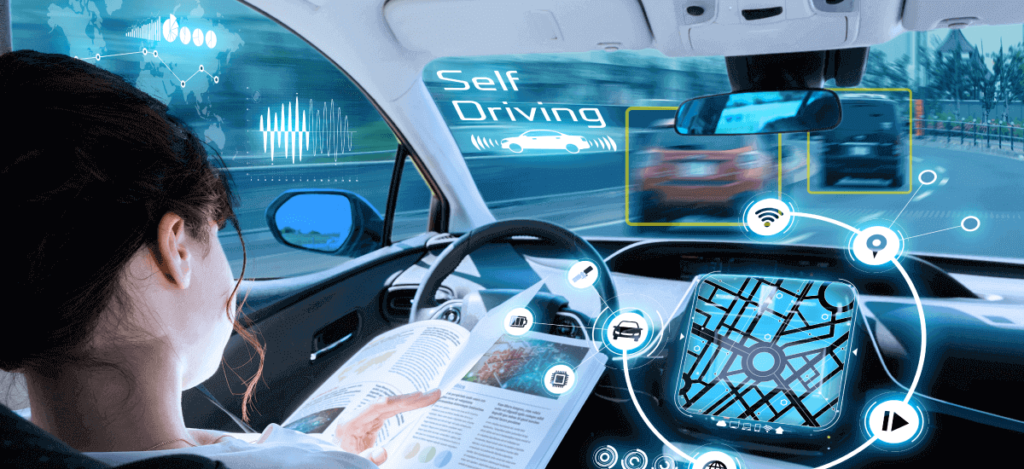
Imagine getting into your car after a long day, entering your destination, and simply sitting back while the vehicle handles the road. No stressful traffic, no constant searching for parking, and no need to keep checking every turn.That is the basic idea behind self-driving cars.Autonomous vehicles are no longer just something we see in science-fiction movies. Technology companies and car manufacturers have been developing systems that can sense roads, recognize objects, understand traffic conditions, and assist—or, in some cases, perform—driving tasks.But how close are we to truly driverless cars everywhere?The answer is more complicated than a simple yes or no.Some vehicles already offer advanced driving assistance, while more highly automated systems operate only in specific conditions and locations. There are still major questions around safety, regulations, cost, infrastructure, cybersecurity, and public trust.In this guide, we’ll look at how self-driving cars work, the different levels of automation, their benefits and challenges, and what the future could look like.
What Are Self-Driving Cars?
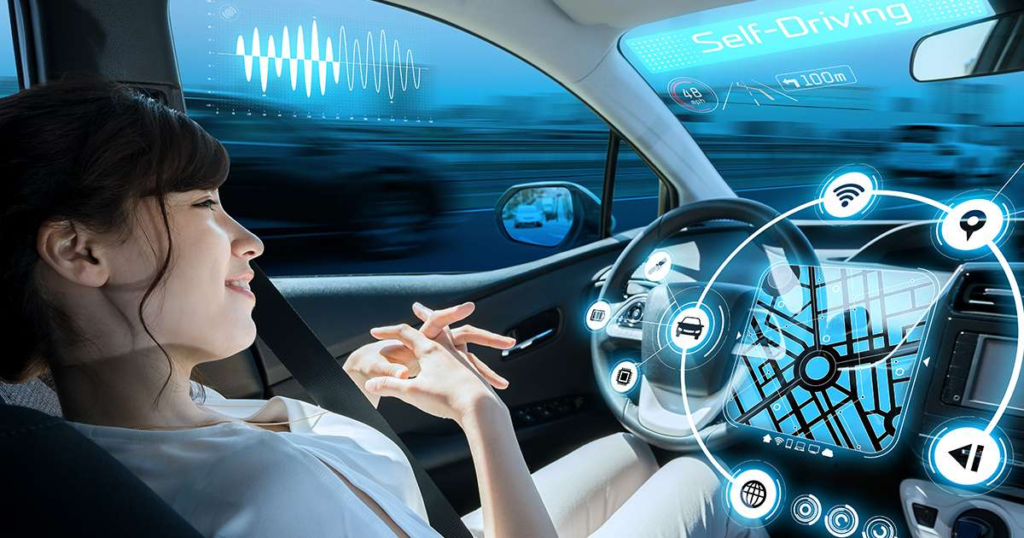
Self-driving cars, also called autonomous vehicles or automated vehicles, are vehicles designed to use technologies such as cameras, radar, sensors, software, and artificial intelligence to perform some or all driving tasks.
A traditional car depends heavily on the human driver to:
- Watch the road
- Identify obstacles
- Follow traffic signals
- Steer
- Accelerate
- Brake
- Change lanes
- Respond to unexpected situations
A highly automated vehicle attempts to perform some of these tasks using its own technology.However, it’s important to understand that not every car marketed with advanced driver assistance is actually a fully self-driving car.Many modern vehicles can help with steering, braking, parking, or maintaining speed while still requiring the driver to remain responsible and attentive.
How Do Self-Driving Cars Work?
A self-driving vehicle is essentially a combination of sensors, computing power, software, maps, and decision-making systems.Think of it as a vehicle that constantly collects information about its surroundings and uses that information to decide what to do next.
The basic process looks like this:
Sense → Understand → Predict → Decide → Act
For example, imagine a car approaching a pedestrian crossing.
The vehicle may:
- Detect the pedestrian using sensors.
- Determine that the person is near the road.
- Predict whether the person might cross.
- Decide to slow down or stop.
- Apply the brakes.
The process happens extremely quickly.
Key technologies used in autonomous vehicles
| Technology | Main Purpose |
|---|---|
| Cameras | Detect lanes, signs, vehicles, people, and objects |
| Radar | Measure distance and detect objects |
| LiDAR | Create detailed 3D information about surroundings |
| GPS | Help determine vehicle location |
| AI & Machine Learning | Interpret information and support decisions |
| Software | Coordinates perception, planning, and vehicle control |
| Digital Maps | Provide information about roads and locations |
| Vehicle Sensors | Monitor speed, position, steering, and other conditions |
Different autonomous vehicle systems use different combinations of these technologies.
What Is LiDAR?
You may have heard the word LiDAR when reading about autonomous vehicles.LiDAR stands for Light Detection and Ranging. It uses laser pulses to measure distances and create a three-dimensional representation of the surrounding environment.In simple terms, imagine the car constantly asking:“What objects are around me, and how far away are they?”LiDAR can help answer that question.However, autonomous driving systems don’t all rely on LiDAR. Some approaches place greater emphasis on cameras, radar, software, or combinations of multiple sensors.There isn’t one universal recipe for building a self-driving vehicle.
Understanding the Levels of Autonomous Driving
One of the easiest ways to understand vehicle automation is through the SAE driving automation levels, which range from Level 0 to Level 5.
| Level | Description | Human Driver Needed? |
|---|---|---|
| Level 0 | No driving automation | Yes |
| Level 1 | Driver assistance for one driving function | Yes |
| Level 2 | Assistance with steering and speed in certain situations | Yes, continuously |
| Level 3 | Automated driving under specific conditions | Sometimes |
| Level 4 | High automation in defined conditions or areas | Not necessarily |
| Level 5 | Full automation in all driving conditions | No |
The important point is that Level 2 is not the same as a fully self-driving car.A Level 2 system can assist the driver, but the human still has an important responsibility for monitoring the driving environment.At Level 4, the vehicle can potentially perform the entire driving task within its defined operating conditions.Level 5 represents the much bigger idea people usually imagine when they hear “fully autonomous car”—a vehicle capable of driving anywhere and under essentially all conditions without human cont hat is a much harder technical problem.
What Can Self-Driving Cars Actually Do?
Depending on the system, autonomous driving technology can perform tasks such as:
- Keeping the vehicle within a lane
- Maintaining a selected speed
- Adjusting speed according to traffic
- Braking when necessary
- Changing lanes
- Parking automatically
- Detecting nearby vehicles
- Recognizing certain road signs
- Navigating mapped routes
- Responding to some road situations
But capabilities vary greatly.
A feature that works well on a controlled highway may not work equally well on a crowded urban street during heavy rain.This is one reason it’s important to understand where and when a particular automated driving system is designed to operate.
The Benefits of Self-Driving Cars
Why are so many people interested in autonomous vehicles?
Because the potential benefits go far beyond simply making driving easier.
1. Improved Road Safety
Human mistakes contribute to many road crashes.
Drivers can become:
- Distracted
- Tired
- Angry
- Overconfident
- Impaired
- Inattentive
An automated system does not become sleepy after a long day or check a phone notification while driving.That doesn’t mean autonomous vehicles are automatically perfect or crash-proof. Technology can fail too.But reducing certain types of human error is one of the major reasons researchers are interested in automated driving.
2. Greater Mobility
Self-driving technology could eventually make transportation easier for people who cannot drive independently.
This could potentially include some:
- Older adults
- People with certain disabilities
- People who do not own a driving licence
- People who find conventional driving difficult
That could make transportation more accessible.
3. More Convenient Travel
Think about the time people spend behind the wheel every week.
If highly automated vehicles become widely available, passengers could potentially use some of that travel time to:
- Read
- Work
- Relax
- Listen to podcasts
- Talk with family
- Rest
The idea of turning travel time into personal time is one of the biggest attractions of autonomous vehicles.
4. Better Traffic Management
If autonomous vehicles can communicate effectively with roads, maps, and other vehicles, they could potentially help traffic move more efficiently.
Vehicles might maintain smoother speeds, reduce unnecessary braking, and make more predictable decisions.
However, this benefit depends heavily on how the technology is deployed across the transportation system.
5. Better Accessibility
Autonomous transportation could eventually help people who currently depend on family members, taxis, or public transportation for everyday journeys.
A trip to a grocery store, workplace, or medical appointment could become easier for some passengers.
Challenges of Self-Driving Cars
The technology sounds exciting, but there are serious challenges.
Safety Is the Biggest Question
A self-driving system needs to handle situations that humans sometimes struggle with—and situations that may be rare but extremely important.
Consider:
- A child suddenly running into the street
- A cyclist moving unpredictably
- Heavy rain reducing visibility
- Construction changing road lanes
- An unusual object lying in the road
- A traffic officer directing vehicles manually
- A road with confusing or missing markings
Real roads are messy.
A controlled test environment can be predictable. A busy city street at 5:30 PM is anything but predictable.
Weather Can Make Things Harder
Rain, fog, snow, dust, and bright sunlight can affect sensors and visibility.
This is particularly important because autonomous vehicles need reliable information about their surroundings.
A system that performs beautifully on a clear afternoon may face a very different challenge during a storm.
Cybersecurity
Modern vehicles increasingly depend on software and connectivity.
That creates another important question:
What happens if someone tries to interfere with the vehicle’s systems?
Autonomous vehicles will need strong cybersecurity protections to reduce the risk of unauthorized access, manipulation, or disruption.
Legal and Ethical Questions
Suppose an automated vehicle is involved in a crash.
Who is responsible?
Is it:
- The vehicle owner?
- The manufacturer?
- The software developer?
- The operator?
- Another party?
These questions become increasingly important as automation becomes more capable.
Self-Driving Cars vs Driver-Assistance Systems
This distinction is worth understanding because advertisements can sometimes make advanced technology sound more autonomous than it actually is.
| Driver-Assistance System | Autonomous Vehicle |
|---|---|
| Helps the human driver | Can perform more driving tasks independently |
| Human remains responsible | Responsibility depends on automation level and operating conditions |
| Usually requires continuous supervision | Higher levels may not require human driving |
| Common in modern vehicles | More advanced technology |
| Designed to assist driving | Designed to automate driving within defined conditions |
A simple rule is:
Driver assistance helps you drive. Autonomous driving aims to drive for you under specified conditions.
Always read the manufacturer’s instructions and limitations for a particular system.
Are Self-Driving Cars Safe?
There isn’t one simple safety answer for all autonomous vehicles.
Safety depends on factors such as:
- Automation level
- Software quality
- Sensor performance
- Operating environment
- Weather
- Road conditions
- Human supervision
- System limitations
- Testing and validation
A vehicle designed for a specific mapped area and controlled operating conditions is a different proposition from a vehicle expected to drive anywhere in any weather.
The safest approach is to judge autonomous technology based on specific capabilities and evidence, rather than assuming that every vehicle with automated features is fully autonomous.
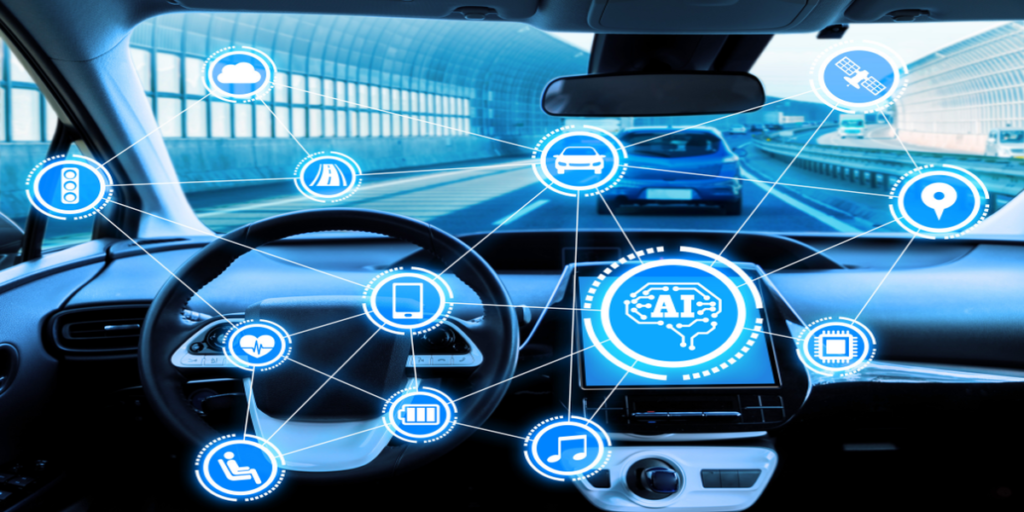
The Role of Artificial Intelligence
Artificial intelligence plays a major role in autonomous driving.An autonomous vehicle may need to understand enormous amounts of information from its surroundings.For example, it may need to distinguish between:A parked carandA moving caror between:A plastic bagand
A person standing near the road. also needs to understand movement and context.A vehicle isn’t simply asking:
“What do I see?”
It is also asking:
“What is likely to happen next?”
That makes autonomous driving a particularly demanding application of AI.
Why Autonomous Driving Is So Difficult
Driving looks easy when you have been doing it for years.
But think about everything a driver does almost automatically.
You recognize:
- Road markings
- Traffic lights
- Pedestrians
- Motorcycles
- Animals
- Emergency vehicles
- Road signs
- Speed changes
- Other drivers’ intentions
You also make predictions.
If a parked car’s wheels suddenly turn toward the road, you may instinctively slow down.
If a pedestrian looks toward traffic, you may anticipate that they could cross.
Humans perform thousands of these tiny judgments during a journey.
Teaching a machine to handle the enormous variety of real-world situations is incredibly challenging.
Autonomous Vehicles and the Future of Transportation
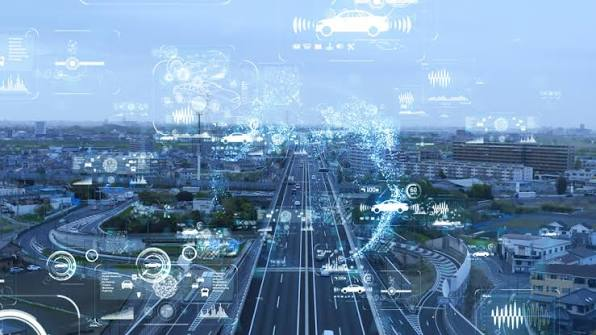
Instead, transportation could become a mixture of:Connected traffic systemsHuman-driven vehiclesDriver-assistance systemsAutonomous taxisDelivery robotsSelf-driving trucksAutomated public transportation
The future may not simply be about replacing every human-driven car with a robot car.
Different technologies may become useful for different situations.
For example, autonomous vehicles may first become common in specific routes, cities, campuses, logistics networks, or other controlled environments before becoming capable of handling every possible road situation.
How Self-Driving Cars Could Change Everyday Life
Imagine a future where your car does more than take you from one location to another.
You might say:
“Take me to work.”
The vehicle checks the route, considers traffic, navigates the journey, and drops you at the destination.
Later, it might leave to pick up another family member.
Or perhaps you don’t own a car at all. Instead, you request an autonomous ride when you need one.
This could change how people think about car ownership, parking, commuting, urban planning, and public transportation.
Of course, whether that future becomes widespread depends on technology, cost, regulation, infrastructure, and public acceptance.
Self-Driving Cars: Pros and Cons
| Potential Advantages | Potential Challenges |
|---|---|
| Reduced dependence on human driving | Complex safety challenges |
| Greater travel convenience | High technology costs |
| Potential accessibility benefits | Cybersecurity risks |
| Possible reduction in some human errors | Difficult weather conditions |
| More productive travel time | Legal responsibility questions |
| New transportation services | Public trust and acceptance |
What Should You Know Before Trusting Autonomous Features?
If you use a vehicle with advanced driving technology, don’t assume the car can do more than it actually can.
Before using an automated feature:
- Read the vehicle’s instructions.
- Understand its operating limitations.
- Know whether the feature requires continuous supervision.
- Stay alert when the system requires human monitoring.
- Understand how to take control.
- Pay attention to road and weather conditions.
- Never treat driver assistance as permission to stop paying attention.
Technology can be impressive, but understanding its limitations is just as important as understanding its capabilities.
The Future Looks Promising—but It Won’t Happen Overnight

Self-driving technology has made impressive progress, but the road toward widespread autonomy is not a straight line.
There will be breakthroughs, setbacks, new regulations, improved sensors, better software, and plenty of lessons learned along the way.
The biggest challenge isn’t simply making a car drive.
It’s making a vehicle reliably understand the unpredictable world around it.
And that is a much bigger problem.
FAQ’S
1. What are self-driving cars?
Self-driving cars are vehicles that use technologies such as cameras, radar, sensors, artificial intelligence, and software to perform some or all driving tasks.
2. How do autonomous vehicles work?
Autonomous vehicles collect information about their surroundings using sensors and cameras. Software and AI then interpret that information and help the vehicle decide how to steer, accelerate, brake, and navigate.
3. Are self-driving cars completely autonomous?
Not all of them. Many vehicles currently offer driver-assistance features rather than full autonomy. The level of automation depends on the specific vehicle and system.
4. What are the different levels of autonomous driving?
Driving automation ranges from Level 0 to Level 5. Level 0 has no automation, while Level 5 represents full driving automation without a human driver.
5. Are self-driving cars safe?
Safety varies by technology, automation level, operating conditions, and system limitations. Weather, road conditions, software performance, and human supervision can all affect safety.